UAE Entities

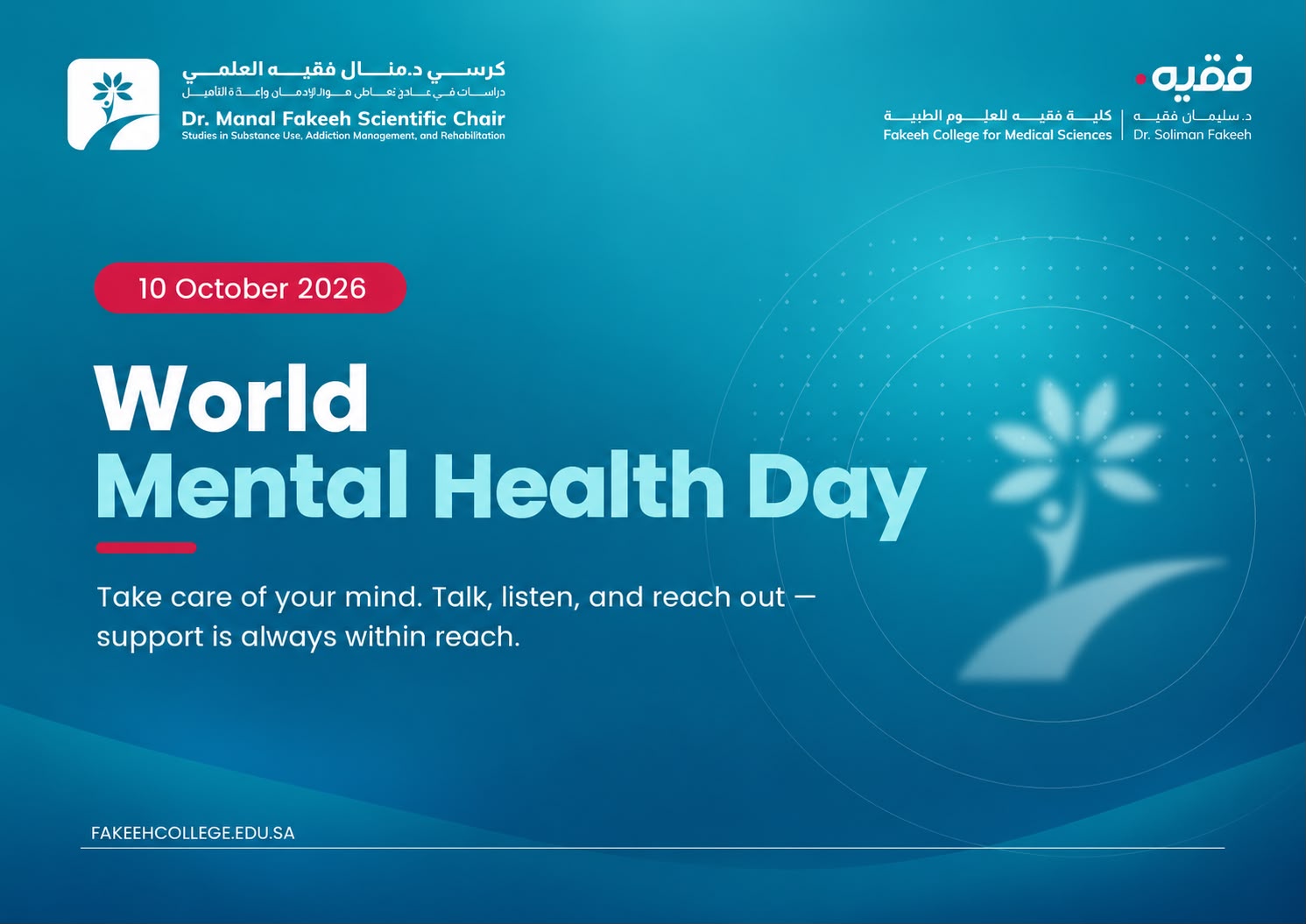
Every year on 10 October, the world marks World Mental Health Day. This year’s theme, announced by the World Federation for Mental Health, is “Lived Experiences Heard: Real Voices, Real Change”(1). The theme does not ask professionals simply to listen to those who have lived through mental health challenges; it calls on them to involve these individuals as genuine partners in designing care and treatment services(2). Those who have lived the experience know things about it that numbers cannot tell.
According to World Health Organization data released in September 2025, more than one billion people are living with mental health conditions such as anxiety and depression, and these conditions are the second leading cause of long-term disability worldwide. Yet mental health still accounts for no more than 2% of government health budgets, the same share as in 2017, and there are no more than 13 mental health workers per 100,000 people(3).
In the Kingdom, the Saudi National Mental Health Survey covered a representative sample of 4,004 citizens aged 15 to 65 and estimated that 34.2% of them experience at least one mental disorder during their lifetime(4). At the same time, about 86% of those who had a disorder in the previous twelve months reported that they had not sought any treatment services(5). The picture is even clearer among young people (aged 15–30): only about 14.5% of those with a mental disorder received treatment(6).
This gap is not caused by a shortage of treatment services alone. Stigma and low mental health awareness remain among the most prominent barriers to seeking care in the Middle East(7,8). In the Saudi National Survey, about half of those who did not seek treatment did not feel they needed it in the first place(5).
This is where the voices of people with lived experience gain their value. A systematic review of 49 randomized trials involving 12,477 participants found that peer support (support provided by people who have been through a similar experience) brings a small improvement in personal recovery and slightly reduces anxiety symptoms, and that its effect was clearer when added to existing treatment services(9). The effect is not large, but it confirms that support built on shared experience is a genuine complement to specialized care, not a substitute for it.
Let listening be the beginning of action, not its end: to listen without prejudgment, to involve those who have lived the experience in awareness, research and program design, and to create environments where everyone can ask for help without fear.
#WorldMentalHealthDay #DrManalFakeehScientificChair #MentalHealth #QualityOfLife #RealVoicesRealChange
1. World Federation for Mental Health – Announcement of the World Mental Health Day 2026 theme
https://wfmh.global/news/2026.26-08-11_world-mental-health-day-2026
2. World Health Organization – World Mental Health Day 2026 campaign page
https://www.who.int/campaigns/world-mental-health-day/2026
3. World Health Organization – Over a billion people living with mental health conditions, 2 September 2025
https://www.who.int/news/item/02-09-2025-over-a-billion-people-living-with-mental-health-conditions-services-require-urgent-scale-up
4. Lifetime prevalence and age of onset of mental disorders – Saudi National Mental Health Survey, 2020
https://doi.org/10.1002/mpr.1836
5. Barriers to mental health treatment – Saudi National Mental Health Survey, 2020
https://pmc.ncbi.nlm.nih.gov/articles/PMC7311952/
6. Prevalence and treatment of mental disorders among Saudi youth, 2023
https://pmc.ncbi.nlm.nih.gov/articles/PMC10105730/
7. Mental health help-seeking experiences of Arabs worldwide – Systematic review, 2023
https://pmc.ncbi.nlm.nih.gov/articles/PMC10170733/
8. Mental health literacy in the Gulf Cooperation Council countries – Systematic review, 2021
https://pmc.ncbi.nlm.nih.gov/articles/PMC7790272/
9. Effectiveness of peer support for personal and clinical recovery – Systematic review and meta-analysis, 2023
https://ps.psychiatryonline.org/doi/abs/10.1176/appi.ps.202100138